


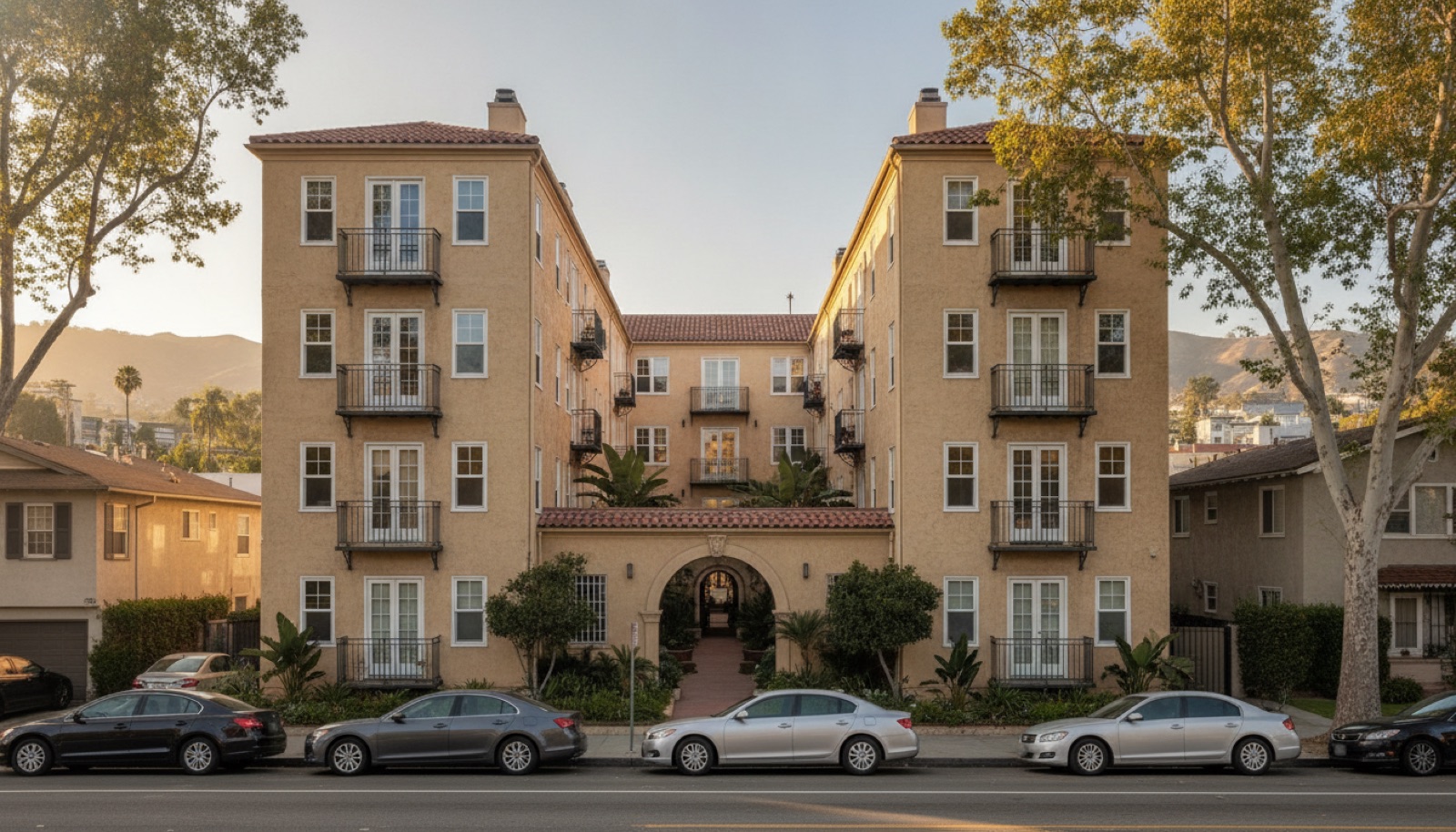
Selling an apartment building in Leimert Park means pricing to the submarket's current cap rates of 5.5% to 7.0% in mid-2026, while accounting for its distinct upside: direct access to the Crenshaw/LAX Metro K Line, which opened in 2022. Buyers underwriting a 7-to-10-year hold price in ridership growth and transit-driven appreciation, but that upside is a long-term thesis, not a near-term justification for pricing above what the current rent roll supports.
The submarket carries a transit-adjacent upside narrative that distinguishes it from comparable South LA submarkets that lack direct Metro access. Buyers pricing in ridership growth and the development pressure that has historically followed rail openings in other Los Angeles corridors are betting on a hold-period argument, not a near-term pricing event. Sellers who understand that distinction will position their buildings more effectively than those who use the Metro narrative as justification for prices the current rent roll does not support.
The submarket is distinct from generic South LA in several meaningful ways. Leimert Park Village on 43rd Place is a named cultural landmark with sustained foot traffic, and the neighborhood's identity as the historic center of LA's African American arts and culture creates a tenant base with above-average retention characteristics. Lower vacancy than comparable South LA submarkets is a structural feature of the neighborhood, not a temporary condition, and it matters when buyers are modeling the holding-period economics. Buildings here are predominantly 4-to-12 units constructed in the 1940s through 1960s, essentially all subject to the Los Angeles Rent Stabilization Ordinance, and most trade between $1.2 million and $3.5 million, which puts the majority of Leimert Park sellers well below the Measure ULA threshold at $5 million. That is a meaningful practical advantage over submarkets like Silver Lake or Echo Park where Measure ULA regularly applies.
This guide covers the complete sale process for Leimert Park apartment building owners: what makes the submarket underwrite differently from generic South LA, how cap rates are set, the RSO and vacancy decontrol mechanics, the Metro upside thesis and its limits, Measure ULA exposure, pricing strategy, who is actively buying, and the mistakes Leimert Park sellers make most often. For the broader South LA context, see Kingside's guide on selling an apartment building in South Los Angeles. For the full LA overview, see the LA apartment building seller guide.


GET YOUR LEIMERT PARK BUILDING'S CURRENT VALUE
Kingside has closed 169 multifamily transactions totaling $336.5M across LA County, including South LA, Inglewood, Pico Union, and Koreatown. Call for a no-obligation current-market valuation on your Leimert Park building.
Call (415) 250-7365 Text Julian julianbloch@kw.comWhat Makes Leimert Park Different From Other South LA Submarkets
South Los Angeles covers a large geographic area with significant internal variation. A seller in Watts is operating in a different market from a seller in Leimert Park, and conflating them produces mispricing. The characteristics that make Leimert Park distinct are not cosmetic; they show up in the actual underwriting that serious buyers apply to the asset class.
The neighborhood has a defined cultural identity: Leimert Park is the historic center of LA's African American arts and culture, and Leimert Park Village on 43rd Place functions as a named commercial and arts district with consistent foot traffic and institutional recognition. That identity is not just a marketing statement. It creates a tenant base with above-average retention, which translates into occupancy stability that buyers model differently from submarkets where turnover is higher. Cultural continuity and place attachment are vacancy risk mitigants, and buyers who know the neighborhood underwrite them accordingly.
The second distinction is transit. Leimert Park has a Metro K Line station. South LA is a large area with multiple neighborhoods that do not have direct rapid transit access. The Crenshaw/LAX line is the first fixed-rail transit infrastructure the neighborhood has had, and its 2022 opening is recent enough that the development and appreciation patterns that typically accompany transit openings are still in early stages. Buyers with a 7-to-10-year hold horizon factor this into their acquisition calculus. That does not make every Leimert Park building worth more than a comparable building in Watts, but it does create a buyer pool segment whose underwriting extends beyond current income alone.
The third distinction is price point. Leimert Park buildings predominantly trade between $1.2 million and $3.5 million, with occasional larger assets approaching $5 million. That range sits almost entirely below the Measure ULA threshold at $5 million, which means most Leimert Park sellers are not facing the additional 4% transfer tax that applies in markets where typical multifamily transactions cross that line. This is a genuine net-proceeds advantage over selling in Koreatown, Silver Lake, or Echo Park, where Measure ULA regularly affects transaction economics.
| Submarket | Typical Cap Rate (Mid-2026) | Typical Price Range (4–12 Units) | Measure ULA Exposure | Metro Access |
|---|---|---|---|---|
| Leimert Park | 5.5% – 7.0% | $1.2M – $3.5M | Rare (most below $5M) | K Line station |
| Inglewood | 5.5% – 7.0% | $900K – $3.0M | Rare (most below $5M) | K Line adjacent, SoFi stadium area |
| Watts / Florence | 6.5% – 8.0% | $700K – $2.5M | None | Blue Line / A Line |
| Koreatown | 4.8% – 5.8% | $1.8M – $8M+ | Common on larger assets | Purple/Red Line |
| Pico Union | 5.0% – 6.2% | $1.4M – $5M | Occasional | Expo Line nearby |
| Echo Park | 4.5% – 5.5% | $1.5M – $6M+ | Common above $5M | Sunset Blvd corridors |
What Is the Leimert Park Multifamily Market Like in Mid-2026?
Transaction activity in Leimert Park is consistent but not high-volume. The submarket is not Koreatown or NELA where dozens of buildings trade each year and the market has deep liquidity and rapid price discovery. Leimert Park is a focused submarket where motivated sellers and serious buyers find each other through broker relationships and direct outreach rather than broad listing exposure. That means pricing discipline and buyer access are more important here than in more liquid markets: an overpriced building does not attract casual interest from a deep buyer pool; it generates minimal engagement and stagnates.
Cap rates in mid-2026 range from 5.5% to 7.0% for Leimert Park multifamily, with the spread driven by three factors: building condition, rent roll position relative to market, and documentation quality. A well-maintained 6-unit building with a full rent roll within 15% of market and a clean LAHD registration history will trade at the tighter end of the range. A building with deferred maintenance, extended long-tenancy rents at 40% to 50% below market, and incomplete documentation will trade at the wider end or require price discovery through the listing process. Deferred maintenance is more common in Leimert Park than in higher-cap-rate NELA submarkets, which reflects both the income levels of the investor class historically active here and the age of the building stock (CBRE LA Multifamily Report, 2025; CoStar South LA Submarket Analysis, 2025).
The building stock is predominantly 4-to-12-unit buildings constructed between 1940 and 1965. Some larger 16-to-24-unit buildings exist, primarily on the major north-south corridors, but they are the exception rather than the norm. A meaningful subset of Leimert Park multifamily is 1940s construction, which carries its own inspection requirements and buyer scrutiny around plumbing, electrical panels, foundation condition, and roof systems that 1960s construction typically does not. Sellers of pre-1950 buildings should factor the likely condition findings from a buyer's inspector into their pre-listing preparation strategy rather than allowing those findings to surface as due-diligence renegotiation points.
| Building Type / Condition | Cap Rate Range (Mid-2026) | Typical Price Range | Primary Buyer Motivation |
|---|---|---|---|
| 4–8 units, well maintained, rent roll near market | 5.5% – 6.0% | $1.4M – $2.8M | Income preservation, Metro hold thesis, 1031 exchange |
| 8–12 units, below-market rents, good condition | 6.0% – 6.5% | $1.8M – $3.5M | Vacancy decontrol upside, long-hold operators |
| 4–12 units, deferred maintenance, below-market rents | 6.5% – 7.0% | $1.2M – $2.5M | Value-add repositioning, below-basis acquisition |
| 12–24 units, any condition | 5.8% – 7.0% | $2.5M – $5.0M | Scale investors, institutional-adjacent operators |
How Does the Crenshaw Metro K Line Affect Leimert Park Building Values?
The Crenshaw/LAX Metro K Line opened in October 2022. The Leimert Park Station sits within walking distance of the commercial core at 43rd Place, making it genuinely transit-adjacent rather than nominally so. Buyers who are underwriting a 7-to-10-year hold period for a Leimert Park apartment building are incorporating the Metro into their thesis in a specific and measurable way: they are pricing in continued ridership growth, transit-oriented development activity at or near the station area, and the appreciation pattern that has accompanied rail openings in other Los Angeles corridors.
The comparable case is the Expo Line, which opened in stages between 2012 and 2016. Neighborhoods along the Expo Line, particularly Palms and the areas adjacent to Culver City and Expo/Crenshaw, experienced meaningful multifamily appreciation in the years following rail opening as transit access improved walkability scores, attracted a different renter profile, and generated developer interest that put upward pressure on land values. Leimert Park buyers who reference the Expo Line corridor as a comparable are not making an unsupported argument. They are applying a documented pattern to a new case with similar structural characteristics (LA Metro Ridership Analysis, 2025; CBRE Transit-Adjacent Multifamily Study, 2024).
The important qualification: transit-adjacent appreciation is a hold-period thesis, not a near-term pricing event. The K Line opened in 2022, and as of mid-2026, the station area is in the early stages of the development cycle that typically follows rail openings. A Leimert Park seller should not expect the Metro narrative to push a buyer to pay a price that requires above-market cap rate compression relative to current income. What it does is expand the buyer pool to include investors whose hold thesis extends beyond the immediate rent roll, which produces better competition for well-prepared listings and, in some cases, meaningfully higher prices from buyers with longer underwriting horizons.
One practical implication of the Metro factor: Leimert Park buildings closer to the station at Leimert Park Village command a walkability premium that buildings further east toward the neighborhood's edges do not. Proximity to 43rd Place and the commercial district, combined with the station access, creates a specific micro-location argument within the neighborhood that sellers should address in the offering memorandum when the asset benefits from it, and should not overclaim when it does not.
How Does the Los Angeles RSO Affect Leimert Park Sellers?
Virtually all multifamily buildings in Leimert Park fall under the Los Angeles Rent Stabilization Ordinance. The RSO applies to all residential rental units in buildings constructed before October 1, 1978, and Leimert Park's building stock was constructed almost entirely between 1940 and 1965. The practical result is near-universal RSO coverage across the submarket. A building postdating October 1978 would be an exceptional case in Leimert Park, and even those newer buildings may fall under AB 1482's statewide rent cap if they have been in continuous residential use for 15 or more years as of the sale date.
The RSO annual allowable increase for 2025–2026 is 4%, applied by the Los Angeles Housing Department (LAHD). This is the ceiling on what a Leimert Park landlord can charge existing RSO tenants in any 12-month period, regardless of what the open market is generating. In a submarket where market rents for a 1-bedroom unit are running $1,600 to $2,000 per month, a long-tenancy RSO tenant paying $850 to $1,100 on the same unit represents a below-market spread of 40% to 60%. That spread is not just a problem for current cash flow. It is the central value argument in every Leimert Park offering memorandum, presented through the lens of vacancy decontrol (LAHD Rent Stabilization Ordinance, 2025; California Civil Code Section 1954.52).
RSO also governs evictions. Leimert Park landlords may only remove tenants for one of 14 just-cause reasons defined under the RSO, and several of those reasons require payment of relocation assistance. The current LAHD relocation assistance amounts for RSO buildings depend on unit size, tenant income, and household composition. Sellers should confirm that all RSO annual registrations are current, that no outstanding relocation obligations exist from any prior notice, and that no pending eviction proceedings are in a contested state. Any of these conditions will surface in a title search or due diligence inquiry and will generate negotiation pressure that could have been avoided with pre-listing compliance verification.
What Is Vacancy Decontrol and Why Does It Drive Buyer Value?
Vacancy decontrol is the mechanism, established under California's Costa-Hawkins Rental Housing Act (California Civil Code Section 1954.52), by which a Los Angeles RSO landlord may reset a rent-controlled unit's rent to current market rate when a tenant voluntarily vacates. The critical qualifier is voluntary: RSO units cannot be reset to market through eviction except for specific just-cause reasons that require relocation assistance payments. The decontrol calendar is tenant-driven, not owner-driven, which means buyers underwrite it as a probabilistic timeline rather than a guaranteed event sequence.
In Leimert Park, where market rents for a 1-bedroom run approximately $1,600 to $2,000 per month and long-tenancy RSO rents on those same units can be $800 to $1,100, the decontrol spread on a single unit is often $500 to $1,200 per month. Across a 6-unit building with three long-tenancy units, that represents $1,500 to $3,600 in monthly income upside at full decontrol, or $18,000 to $43,200 in additional annual NOI. Capitalized at a 6.0% rate, that is $300,000 to $720,000 in value. Buyers model this. Sellers who do not present it leave the buyer to run conservative self-generated projections, which almost always produce lower numbers than a professionally prepared offering memorandum would generate.
| Unit Type | Current RSO Rent (Long-Tenancy) | Current Market Rent (Mid-2026) | Decontrol Uplift on Vacancy |
|---|---|---|---|
| Studio | $600 – $850 | $1,200 – $1,500 | $350 – $900/month |
| 1 Bedroom | $800 – $1,100 | $1,600 – $2,000 | $500 – $1,200/month |
| 2 Bedroom | $1,050 – $1,500 | $2,000 – $2,600 | $500 – $1,550/month |
The offering memorandum for any Leimert Park building should include an annotated rent roll showing each tenant's move-in date, current rent, and the building's current market rent by unit type, followed by a stabilization model showing year-by-year decontrol projections under conservative turnover assumptions. Buyers will apply their own stress tests to these projections, but presenting them shifts the negotiating frame from what the building generates today to what it will produce at stabilization. That framing consistently produces higher offers than income-only presentations.
One Leimert Park-specific nuance: buildings with 1940s or early-1950s construction and tenants who have been in place since the 1970s or 1980s can have rents in the $500 to $750 range on units that now rent for $1,800 to $2,200 at market. Those units represent the most extreme decontrol upside in the submarket, and they are not rare in a neighborhood where long-tenancy retention has been a feature of the community. A 4-unit building where two of four units rent for $650 and market is $1,800 has more latent value than a comparable building in a neighborhood where tenants turn over every three years. That value belongs in the offering memorandum.
VACANCY DECONTROL MODELED INTO EVERY LEIMERT PARK LISTING
Kingside prepares complete offering memoranda with unit-by-unit vacancy decontrol modeling as a standard part of every Leimert Park listing engagement. No extra charge. This is the analysis that separates $300,000 in offer price.
Call (415) 250-7365 Text Julian julianbloch@kw.comWhen Does Measure ULA Apply to a Leimert Park Sale?
Measure ULA, formally the Homelessness and Housing Solutions Tax, imposes an additional transfer tax on all real property sales within the City of Los Angeles above $5 million. Leimert Park is in the City of Los Angeles. The tax took effect April 1, 2023, under Los Angeles Municipal Code Section 21.9.2, and it is the seller's obligation at close of escrow.
For most Leimert Park sellers, Measure ULA does not apply. The submarket's typical 4-to-12-unit building range produces sale prices between $1.2 million and $3.5 million, well below the $5 million threshold. This is a structural advantage over NELA markets like Silver Lake and Echo Park, where the combination of tighter cap rates and larger building sizes produces transactions that regularly cross the ULA threshold. A Silver Lake seller who nets $220,000 in Measure ULA tax on a $5.5 million transaction is starting from a meaningfully different position than a Leimert Park seller whose $2.8 million sale carries no ULA obligation (Los Angeles Municipal Code Section 21.9.2).
| Sale Price | ULA Tax Rate | Tax Owed (Approximate) | Leimert Park Frequency |
|---|---|---|---|
| Under $5,000,000 | 0% (not subject to ULA) | $0 | Majority of transactions |
| $5,000,000 – $10,000,000 | 4% on total sale price | $200,000 – $400,000 | Larger assets only (16–24 units) |
| Above $10,000,000 | 5.5% on total sale price | $550,000+ | Rare; requires 24+ unit building at market value |
Leimert Park sellers who own larger assets, specifically 16-to-24-unit buildings on primary corridors, should run the Measure ULA calculation before accepting any Letter of Intent. A sale at $5.1 million triggers $204,000 in ULA tax while a sale at $4.95 million carries no ULA obligation. That $150,000 pricing decision has a net-proceeds consequence of $204,000, which inverts the economics in a way that is not visible without explicit analysis. Kingside runs a full net proceeds model, including the ULA cliff scenario, before setting any Leimert Park listing price above $4.5 million.
How Do You Price a Leimert Park Building Correctly?
Leimert Park buyers are analytical. The buyer pool here is drawn primarily from investors who have already purchased in Inglewood, Compton, or elsewhere in South Los Angeles and are deploying additional capital with a clear underwriting framework. They are not guessing at value; they are running income models, applying cap rate targets based on their existing portfolio, and adjusting for condition and documentation quality. Overpriced listings do not attract curious buyers who will talk themselves into paying above market; they generate no activity and sit until the seller reduces the price, often after having damaged the listing's perception through stale days-on-market exposure.
The Metro upside narrative, while real as a long-hold thesis, does not justify pricing above what the current rent roll supports on a standalone income basis. A buyer who is underwriting the Metro upside will pay a premium over current-income-only valuation, but that premium is bounded by their required return and hold-period assumptions. It does not eliminate income discipline. Sellers who approach Leimert Park pricing with the assumption that "the Metro means buyers will pay more" without presenting a complete income model, documented decontrol analysis, and clean building condition are misunderstanding how the premium actually gets priced into a transaction.
The correct pricing sequence for a Leimert Park apartment building is: (1) establish current NOI accurately from a complete 12-month trailing expense and income statement; (2) calculate the current-income cap rate at your proposed price; (3) model the stabilized NOI at full decontrol, showing turnover assumptions by unit; (4) calculate the decontrol-scenario cap rate at your proposed price; (5) compare both against current market cap rates for comparable Leimert Park assets; (6) assess where your building's condition and documentation quality position it within that range. A price that requires a buyer to underwrite below 5.5% on current income in Leimert Park will not clear the market. A price that implies 6.0% to 6.5% on current income but presents a well-documented decontrol model with a stabilized yield of 7.5% to 8.5% will attract serious buyers.
Buildings with deferred maintenance face a compounding pricing challenge in Leimert Park. The buyer pool for these assets is smaller and more price-sensitive than the pool for well-maintained assets. The Metro narrative does not extend to buyers who are also pricing in a capital expenditure queue on top of their acquisition price. Sellers of buildings with significant deferred maintenance should address major items before listing, estimate the cost of what they cannot address, and price accordingly. Attempting to price a deferred-maintenance building at a clean-building cap rate wastes 60 to 90 days and signals to the market that the seller does not understand their own asset.
Who Buys Apartment Buildings in Leimert Park
The Leimert Park buyer pool is smaller than the NELA buyer pool but it is active and focused. The buyers who consistently transact here are not first-time acquirers of Los Angeles multifamily; they are experienced South LA operators expanding their footprint, 1031 exchange buyers from smaller South LA or Mid-City sales deploying proceeds into larger or better-positioned assets, and long-hold investors who have a specific thesis around the Crenshaw Metro corridor. Understanding which buyer type is most likely to produce the best price for a specific building matters when structuring the marketing process.
Value-add investors who have already purchased in Inglewood, Compton, or other South LA submarkets represent the core Leimert Park buyer segment. These are operators who understand the RSO framework, have executed vacancy decontrol programs before, and are comfortable underwriting assets in the $1.5 million to $3.5 million range without requiring institutional-grade due diligence infrastructure. They are direct and decisive when a listing is priced correctly and documented thoroughly, and they are the buyers most likely to move quickly from LOI to close.
Long-hold Metro-thesis investors are a distinct and important segment. These buyers are underwriting a 7-to-10-year or longer hold, prioritizing price appreciation from transit-adjacent development over near-term income maximization. They are willing to accept slightly lower initial yields on Leimert Park buildings compared to non-transit-adjacent South LA assets because their model shows a different exit price in 10 years. These buyers are often in accumulation mode, seeking to build a Crenshaw corridor concentration before development activity around the station area pushes acquisition prices higher. Reaching this buyer pool requires active outreach into networks that track the K Line corridor, not just standard South LA buyer lists.
1031 exchange buyers are a consistent source of demand across South LA and Leimert Park benefits from this flow. A seller completing a transaction in Mid-City, Palms, or elsewhere in the Westside who is seeking to deploy proceeds into a higher-cap-rate South LA asset is a natural Leimert Park buyer. These buyers often have compressed timelines due to 45-day identification deadlines and are willing to move quickly on well-documented listings that meet their replacement property criteria. See Kingside's guide on 1031 exchange strategy for LA apartment building sellers for the full mechanics.
The Leimert Park buyer pool does not include the same level of SGV or Pasadena crossover demand that Eagle Rock or Highland Park see. Geographic distance and the submarket's position within South LA mean that the buyers who know this market have South LA experience rather than NELA experience. Brokers who specialize in NELA transactions may not have the active South LA buyer relationships that produce competitive bid processes in Leimert Park. The right broker for a Leimert Park listing has closed transactions in the South LA corridor, not just adjacent neighborhoods at the other end of the city.
How the Sale Process Works
A well-prepared Leimert Park multifamily sale takes 90 to 150 days from initial broker engagement to close of escrow. The timeline is similar to comparable South Los Angeles markets, with the key variables being how much pre-listing preparation is required and whether a competitive bid process is possible given the building's pricing and documentation quality.
| Phase | Typical Duration | Key Activities |
|---|---|---|
| Pre-listing preparation | 1 – 2 weeks | Rent roll verification, LAHD compliance review, NOI statement, offering memorandum, decontrol model, net proceeds estimate |
| Buyer outreach and tours | 2 – 4 weeks | Qualified buyer list, direct outreach to South LA active operators, Metro-thesis investor network, scheduled tours, LOI solicitation |
| LOI review and acceptance | 1 – 2 weeks | LOI negotiation, seller selection, earnest money deposit into escrow |
| Due diligence | 21 – 30 days | Physical inspection, rent roll verification, LAHD documents, financial review, contingency waiver |
| Escrow and close | 15 – 30 days | Grant deed execution, wire transfer, keys, final proration |
One Leimert Park-specific consideration in the sale process: the offering memorandum should address the Metro upside thesis explicitly, with a section that presents the K Line station proximity and the hold-period appreciation argument alongside the current income analysis. This is not standard in South LA offering memoranda for submarkets without transit access. Buyers who are specifically seeking Metro-adjacent assets will look for this framing; buyers who are purely income-focused will discount it appropriately. Presenting it professionally increases the probability that a Metro-thesis buyer is in the competitive field, which improves pricing for all sellers regardless of which buyer type ultimately prevails.
Documentation completeness is as important in Leimert Park as in any South LA submarket. Buyers who receive an OM that lacks trailing 12-month income and expense statements, current rent ledgers, LAHD registration certificates, and any outstanding Notice of Violation documentation will either withdraw or reduce their offer price to account for the uncertainty they are absorbing. Sellers who cannot produce complete documentation at the time of listing should treat that as a pre-listing task, not something to address during due diligence.
START WITH A CURRENT-MARKET PRICING ANALYSIS
Before any LOI, any listing, or any conversation with a buyer, know what your Leimert Park building is actually worth in mid-2026. Kingside provides a no-obligation analysis that models current income, vacancy decontrol upside, and Metro proximity premium.
Get Free Pricing Analysis Call Julian: (415) 250-7365 julianbloch@kw.comWhat Mistakes Do Leimert Park Sellers Make?
Pricing on the Metro narrative without income support. The Crenshaw K Line is a genuine long-hold value driver for Leimert Park buyers. It is not a substitute for income analysis. Sellers who set asking prices based on the Metro upside story without presenting a complete rent roll, NOI statement, and decontrol model are asking buyers to make a faith-based acquisition rather than an underwritten one. Experienced South LA buyers do not make faith-based acquisitions, and the result is no offers, not lower offers.
Ignoring deferred maintenance until due diligence. Leimert Park buyers who are paying 6.0% to 6.5% cap rates on buildings with active decontrol upside are paying for income potential. When their inspector finds a roof with five years of remaining life, a plumbing system that requires a full repipe, or a foundation with deferred crack repair, those findings become due diligence renegotiation items that the buyer uses to reduce the agreed price. Addressing major defects before listing eliminates those renegotiation variables. Minor cosmetic issues in the submarket rarely affect pricing and can be skipped.
Listing without a complete documentation package. Leimert Park buyers are experienced South LA operators. An offering memorandum that lacks trailing financials, a current rent ledger with move-in dates, LAHD registration certificates, and any Notice of Violation history signals either a problem the seller is concealing or a seller who does not understand what buyers need to close transactions. Either interpretation generates reduced offers or no offers.
Not modeling the decontrol upside in the offering memorandum. This is the most expensive omission in Leimert Park listings. If a seller presents a building on a current-income basis only, buyers will run their own decontrol models using conservative turnover assumptions. Those models are always more conservative than a professionally prepared unit-by-unit analysis from a broker who knows the neighborhood's rental market. The gap between a buyer-generated decontrol model and a broker-prepared one can be $200,000 to $400,000 in offer price on a Leimert Park mid-size building.
Selecting a broker without South LA buyer relationships. Leimert Park is not an NELA submarket. The active buyer pool for South LA multifamily is a specific group of operators with South LA experience, not crossover buyers from the SGV corridor or North LA. A broker whose primary experience is in Koreatown, Silver Lake, or NELA may not have direct relationships with the value-add operators and Metro-thesis investors who are the most active Leimert Park buyers. Those relationships determine whether a well-priced listing generates a competitive bid process or a single LOI from a bottom-fishing buyer.
Overlooking the Measure ULA cliff on larger assets. Most Leimert Park sellers are unaffected by Measure ULA. Owners of 16-to-24-unit buildings approaching the $5 million range should run the net-proceeds calculation at multiple price points before accepting any offer. A transaction structured at $4.95 million rather than $5.05 million may produce better net proceeds for the seller even though the gross price is lower.
For context on the broader South LA market dynamics, see selling an apartment building in South Los Angeles. For cap rate data across LA submarkets, including current South LA figures, see Kingside's guide on LA apartment building cap rates in 2025–2026. For comparable South LA corridor activity, see selling an apartment building in Inglewood. For rent control mechanics that apply across the submarket, see rent control laws for LA apartment building owners. For exchange strategy after close, see 1031 exchange strategy for LA apartment building sellers.
169 TRANSACTIONS. THIS IS WHAT WE DO.
Kingside Investment Group has closed 169 multifamily transactions totaling $336.5M and over 1,700 units across LA County, including South LA, Inglewood, Pico Union, and Koreatown. We know the Leimert Park buyers, the price points, and the paperwork.
Call (415) 250-7365 Text Julian julianbloch@kw.comFrequently Asked Questions
What are cap rates for apartment buildings in Leimert Park?
Leimert Park apartment buildings are trading at cap rates of 5.5% to 7.0% in mid-2026, depending on condition and rent roll position. Well-maintained buildings with rents within 15% of market trade at the tighter end of the range. Buildings with significant deferred maintenance or extended long-tenancy rents at 40% to 50% below market trade toward the wider end or require price discovery through the listing process. These cap rates are higher than comparable NELA submarkets like Eagle Rock (4.8% to 6.5%) but reflect the genuine income and risk profile of South LA multifamily rather than a discount on quality (CBRE LA Multifamily Report, 2025).
Does RSO apply to Leimert Park apartment buildings?
Yes, for virtually all of them. The Los Angeles Rent Stabilization Ordinance applies to all residential rental units in buildings constructed before October 1, 1978, and Leimert Park's multifamily building stock was built predominantly between 1940 and 1965. RSO coverage is near-universal in this submarket. The 2025–2026 RSO allowable annual rent increase is 4% (LAHD Rent Stabilization Ordinance, 2025). Sellers should verify that annual LAHD registration is current before listing, as outstanding registration fees routinely surface in title searches and become buyer negotiation points (California Civil Code Section 1954.52; LAHD Rent Stabilization Ordinance, 2025).
Does the Crenshaw Metro line affect apartment building values in Leimert Park?
Yes, for buyers underwriting a long hold period. The K Line opened in October 2022 with a station serving the Leimert Park Village area. Buyers who are holding for 7 to 10 years factor in continued ridership growth and the development-adjacent appreciation that has accompanied transit openings in other LA corridors, including the Expo Line in Palms and Culver City. That Metro premium is real but bounded: it expands the buyer pool to include investors with longer hold horizons and adds a measurable premium above current-income-only valuation for well-prepared listings. It does not substitute for income analysis or compensate for deferred maintenance (LA Metro Ridership Analysis, 2025; CBRE Transit-Adjacent Multifamily Study, 2024).
How is Leimert Park different from South Los Angeles for apartment building sales?
Leimert Park is a distinct submarket within the South LA umbrella, not a generic South LA building. The differences that matter for sellers: Leimert Park has a named Metro station on the K Line, which most South LA submarkets do not have; Leimert Park Village is a sustained commercial and cultural district with above-average foot traffic and tenant retention characteristics; and Leimert Park buildings predominantly trade between $1.2 million and $3.5 million, below the Measure ULA $5 million threshold. Watts or Florence buildings trade at higher cap rates because those submarkets lack the same transit access and cultural identity driver. A broker treating Leimert Park as generic South LA will underprice the Metro and cultural identity premium and overestimate the deferred-maintenance tolerance of the buyer pool.
Does Measure ULA apply to Leimert Park apartment building sales?
For most Leimert Park sellers, no. Measure ULA imposes a 4% transfer tax on City of Los Angeles property sales between $5 million and $10 million, and 5.5% above $10 million (Los Angeles Municipal Code Section 21.9.2). Most Leimert Park 4-to-12-unit buildings trade between $1.2 million and $3.5 million, well below the threshold. Sellers of larger assets, specifically 16-to-24-unit buildings, should run a net-proceeds calculation at multiple price points before accepting any offer, as a transaction structured at $4.95 million may net more than one at $5.1 million once the $204,000 ULA obligation is factored in.
What do buyers look for in Leimert Park apartment buildings?
Leimert Park buyers in 2026 are evaluating several specific factors: the rent-to-market spread on each RSO unit (deeper below-market rents create more vacancy decontrol upside); building condition (deferred maintenance requires capital that competes directly with acquisition capacity); documentation completeness (a professionally prepared offering memorandum with NOI statement, rent ledger, LAHD registration certificates, and decontrol modeling generates meaningfully better offers); RSO compliance status (any outstanding LAHD issues or contested tenancy situations are immediate negotiation points); and location relative to the Leimert Park Village station area and 43rd Place commercial district.
How long does it take to sell an apartment building in Leimert Park?
A well-prepared Leimert Park multifamily sale typically takes 90 to 150 days from initial broker engagement to close of escrow. Pre-listing preparation (rent roll, LAHD verification, offering memorandum, decontrol model) takes one to two weeks. Buyer outreach and LOI collection takes two to four weeks. Due diligence runs 21 to 30 days. Escrow follows. Sellers with organized documentation and accurate pricing close in the shorter end of that range. Buildings with deferred maintenance that surfaces during due diligence, or pricing that requires adjustment during the marketing process, can extend the timeline to 180 days or more.
What is my Leimert Park apartment building worth?
Leimert Park apartment buildings are valued primarily by capitalized net operating income, adjusted for vacancy decontrol potential, building condition, and documentation quality. A 6-unit building with a well-documented rent roll, rents 30% below market, and no deferred maintenance might trade at a 6.0% cap rate on current income, implying a value of roughly $1.8 million to $2.5 million depending on NOI. The same building with deferred maintenance and incomplete documentation might trade at 6.5% to 7.0%, reducing the value accordingly. The Metro proximity premium adds a measurable amount for buyers with long hold horizons, but the precise figure depends on what the current income analysis shows. Call Julian Bloch at (415) 250-7365 for a no-obligation current-market analysis specific to your building.
WHAT IS MY LEIMERT PARK BUILDING WORTH?
169 closed transactions. $336.5M total volume. Deep buyer relationships in South LA, Inglewood, and the Crenshaw corridor. If you are considering a sale, start with a conversation about what your building is actually worth today.
Start the Conversation Call (415) 250-7365 julianbloch@kw.comMore in This Series
.png)