


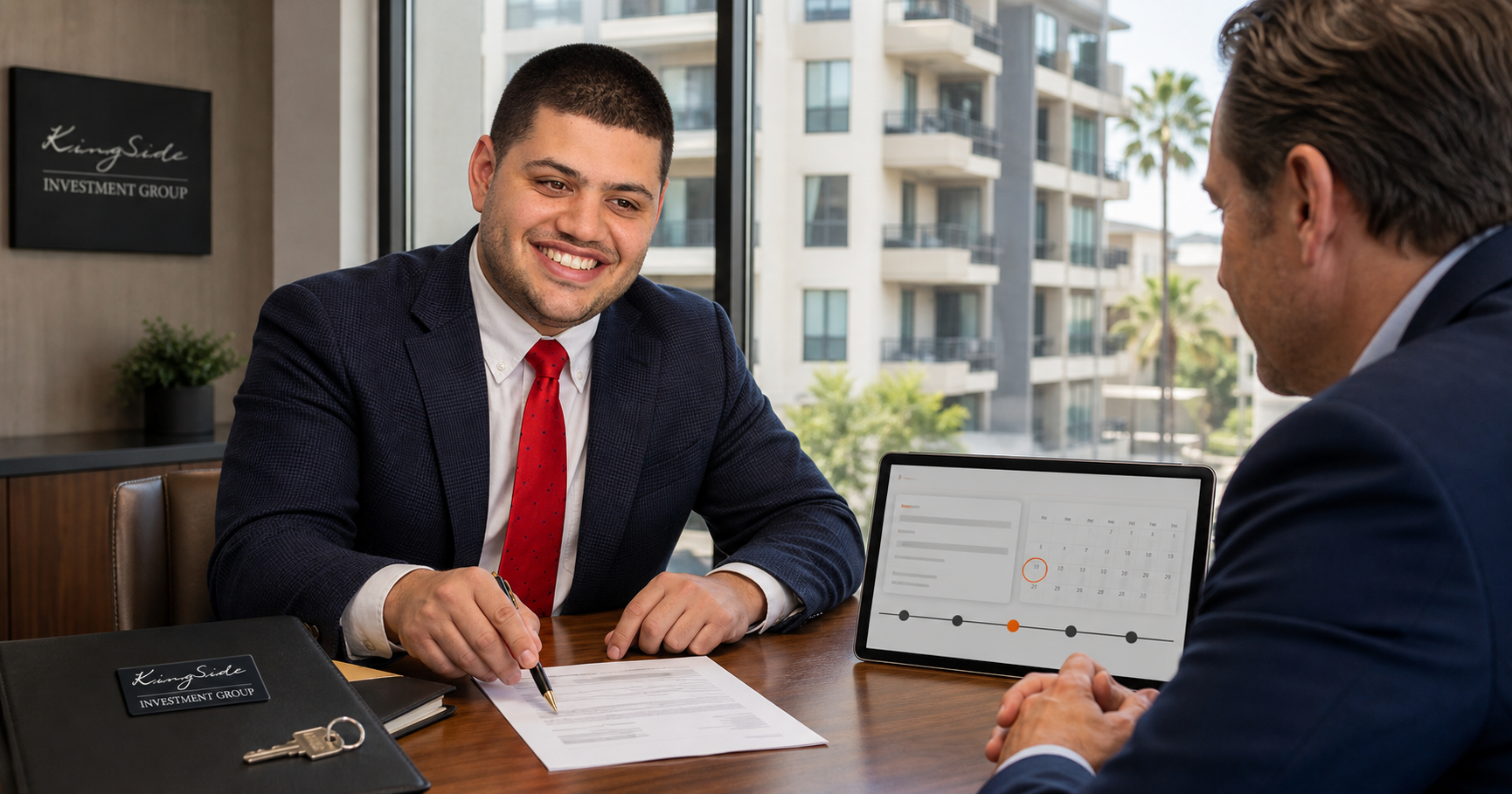
Usually, require a meaningful deposit with a precise staged path to becoming nonrefundable, not merely a large number labeled “hard.” For an LA apartment sale, compare funding proof, delivery timing, contingency deadlines, California Civil Code section 1671 enforceability, and escrow-release terms before treating the deposit as closing protection.
A deposit is one part of an offer, not a substitute for buyer qualification. A Los Angeles seller can accept a large deposit and still spend weeks exposed to broad inspection, financing, document-review, title, or partner-approval conditions. Another buyer may offer a smaller deposit but fund it promptly, finish diligence on a fixed calendar, and accept a clear nonrefundable trigger. The second structure may create more practical certainty even though its headline deposit is lower.
Apartment-building contracts also require a legal distinction that residential sellers often miss. California's familiar 3% framework is tied to a narrowly defined buyer-occupied property of no more than four units. A typical non-owner-occupied multifamily acquisition, and every acquisition involving more than four units, does not fit that definition. The enforceability analysis then runs through the general reasonableness rule and real-property contract formalities, not a universal 3% safe harbor.
Compare the deposit in the context of the whole offer
Julian Bloch helps Los Angeles apartment owners compare amount, timing, contingencies, buyer capacity, and closing risk before selecting an offer.
Call Julian at (415) 250-7365 Request a property evaluationShould I Require a Hard Deposit on an LA Apartment Building?
Yes, many Los Angeles apartment sellers should ask for some deposit protection, but the right structure depends on the building and buyer. A clean, stabilized property with organized leases, operating statements, and inspection access can support an earlier hardening date because the buyer can investigate quickly. A Koreatown or Pico Union building with old records, open permits, tenant disputes, or inconsistent expense history may need a defined diligence window before a sophisticated buyer can responsibly place money at risk.
The seller's goal is not to punish a buyer for performing legitimate diligence. The goal is to prevent a buyer from controlling the property for an extended period without meaningful commitment. A properly designed deposit compensates for that control by creating a financial consequence after the buyer has had a fair opportunity to investigate the matters stated in the agreement.
A hard deposit can also expose a weak buyer before acceptance. A buyer who promotes a large nonrefundable amount but cannot explain when it will be wired, which entity will fund it, what conditions survive, or who must approve the acquisition is not presenting a complete commitment. Los Angeles apartment owners should ask for proof of liquid funds and confirm that the buyer entity, funding source, and contract signer align.
Need a seller-side term comparison?
Kingside can organize competing Los Angeles multifamily offers into an execution matrix before you accept one.
Discuss the offers at (415) 250-7365 See Kingside's seller servicesWhat Does “Hard” Actually Mean in a Purchase Agreement?
“Hard deposit” is transaction shorthand. California statutes speak in terms of payments, liquidated damages, contract requirements, reasonableness, and escrowed funds. The shorthand only becomes useful when the written agreement states what refund rights end, when they end, how much money is affected, and what remedies remain.
Amount
The agreement should state the initial deposit and every added deposit separately. A percentage can help compare offers, but the dollar amount controls the seller's actual exposure. On a Los Angeles apartment sale, the amount should be evaluated against expected carrying costs, time off market, failed-escrow stigma, and the difficulty of returning to backup buyers.
Delivery and cleared funds
A promised deposit is not a funded deposit. The offer should identify when escrow must receive the money, how delivery is confirmed, and what happens if the buyer misses the deadline. California DRE guidance stresses full disclosure of the form, amount, and disposition of earnest money. A personal check, wire, or other instrument can create different timing and collection risks.
Refund conditions
An earnest-money deposit can remain refundable while the buyer holds inspection, financing, document, title, zoning, environmental, appraisal, tenant-estoppel, partner-approval, or other conditions. Calling the money hard while broad conditions remain open creates ambiguity. The Los Angeles seller should list each surviving condition and its expiration date rather than relying on a general label.
Remedy and release
A nonrefundable promise and an escrow disbursement are not the same event. The agreement may limit the buyer's refund rights, yet the escrow holder may still require mutual instructions, a court order, or another valid basis for release while the parties dispute entitlement. California DRE escrow guidance distinguishes neutral holding from the parties' substantive contract rights and discusses interpleader when a dispute cannot be resolved (California DRE Reference Book, ch. 10, accessed Aug. 26, 2026). Sellers should not promise themselves immediate access until counsel and escrow confirm the release mechanics.
Does California's 3% Rule Apply to My Apartment Building Sale?
Not automatically. Civil Code section 1675 defines “residential property” for its special liquidated-damages framework as a dwelling that contains no more than four residential units and that the buyer intends to occupy as a residence. Both requirements must be present. A duplex, triplex, or fourplex bought by an owner-occupant can fall within the section. The same fourplex bought strictly as an investment does not satisfy the occupancy element. A five-unit building cannot satisfy the unit-count element.
Within the narrow section 1675 category, a payment actually made up to 3% of the purchase price is presumptively valid unless the buyer establishes that the amount is unreasonable. If the amount actually paid exceeds 3%, the party seeking to uphold it must establish that the amount is reasonable. The statute does not say that a seller automatically receives the money, and it does not make 3% a universal cap for commercial multifamily contracts.
For other real-property purchase contracts, Civil Code section 1676 points to section 1677 and the general rule in section 1671(b). Section 1671(b) states that a liquidated-damages provision is valid unless the party challenging it establishes that it was unreasonable under the circumstances existing when the contract was made. Section 1677 requires separate signature or initials by each party and specified type treatment in a printed contract.
The practical result for a Los Angeles apartment owner is straightforward: do not import a single-family rule into a five-unit, twenty-unit, or non-owner-occupied investment sale. Have counsel review the actual property, buyer occupancy intent, deposit size, anticipated damages, contract form, and remedy language. The legal category changes the analysis.
Separate the residential rule from the multifamily deal
Julian can help identify the transaction facts and negotiation points your attorney needs to review before acceptance.
Call (415) 250-7365 Send Kingside the offer termsHow Should I Compare Hard-Deposit Structures?
Los Angeles apartment owners should compare deposit structures side by side. The matrix below is a negotiation tool, not a prediction of legal enforceability. Each row changes the buyer's economic commitment and the seller's risk in a different way.
| Deposit structure | When refund rights narrow | Seller signal | Main seller risk | Term to clarify |
|---|---|---|---|---|
| Fully contingent deposit | After stated contingencies are satisfied or waived | Low to moderate until removal | A large amount may create little pressure while broad exits remain | Deadline and written removal method for every condition |
| Staged hard deposit | After defined inspection, records, title, or financing milestones | Balanced when milestones are short and objective | Vague triggers can produce a dispute | Exact date, amount, writing, and surviving conditions |
| Day-one nonrefundable deposit | At acceptance or funding, as expressly agreed | Strong if funded and enforceable | Buyer may seek price or diligence concessions, and enforceability still matters | Counsel review of reasonableness and remedy language |
| Nonrefundable funds held in escrow | At the stated contract trigger | Stronger than a refundable deposit | A good-faith dispute can still delay disbursement | Escrow-release instructions and dispute path |
| Early release to seller | When the parties authorize release before closing | Immediate seller access | Repayment, title, tax, insolvency, and litigation exposure may increase | Separate attorney and escrow approval before agreement |
The strongest row is not always the right row. A day-one hard deposit can discourage qualified institutional or experienced private buyers when the seller has not yet delivered a complete diligence package. A staged structure may attract more competition while still ending the buyer's free option promptly. Before countering, the seller should choose one written structure with a stated deposit amount, funding deadline, hardening trigger, and surviving exceptions.
Turn the offer into a term-by-term comparison
Julian can help an LA apartment seller compare the deposit structure with buyer liquidity, diligence length, and closing risk before issuing a counter.
Review the Offer: (415) 250-7365When Should the Deposit Become Nonrefundable?
A staged trigger often works well in Los Angeles multifamily because it connects commitment to completed work. The buyer may receive a short initial period to review leases, rent rolls, trailing operating statements, service contracts, code records, preliminary title, and physical access. After those defined items are delivered and the agreed period expires, some or all of the deposit becomes nonrefundable, subject to specifically preserved conditions.
The milestone should be objective. “After buyer approval” leaves the trigger inside the buyer's discretion. “At 5:00 p.m. on the tenth business day after seller delivery of the listed records” is more concrete, but counsel should still adapt the language to the transaction. If document delivery is incomplete, the agreement should state whether the clock pauses, extends, or proceeds.
A second deposit can deepen commitment later. For example, the buyer may fund an initial amount after acceptance and an added amount after physical inspection or loan approval. In a buyer-occupied 1-to-4-unit transaction governed by Civil Code section 1675, section 1678 imposes additional requirements for later payments intended as liquidated damages. In other Los Angeles multifamily deals, counsel should still draft every added-deposit trigger and remedy with precision.
Sellers should also decide whether any conditions survive the hardening date. Title defects, casualty, condemnation, seller default, prohibited changes to the rent roll, or failure to deliver agreed documents may remain relevant. A statement that “all contingencies are removed” can create unintended consequences if the offer separately preserves termination rights.
Set a calendar that creates commitment
Kingside can map the Los Angeles diligence package, buyer milestones, and backup-offer strategy before your attorney finalizes the deposit language.
Call Julian at (415) 250-7365 Text JulianWhat Deposit Terms Should an LA Seller Negotiate?
A Los Angeles apartment seller should reduce the deposit discussion to written, testable fields. A precise term sheet makes offers easier to compare and gives counsel a cleaner drafting assignment.
- Initial amount: State the exact dollar amount rather than only a percentage.
- Funding source: Match the deposit source to the buyer entity and proof of liquid funds.
- Delivery deadline: Identify the date, time, method, and recipient.
- Cleared-funds confirmation: Require escrow confirmation rather than relying on a buyer's email.
- Every contingency: List inspection, records, financing, appraisal, title, zoning, environmental, tenant, and internal-approval conditions.
- Removal mechanics: State whether removal is automatic, requires signed writing, or depends on another event.
- Hardening trigger: Tie the exact amount to a date and defined event.
- Extension price: If the buyer requests more time, state whether an added nonrefundable deposit is required.
- Liquidated damages: Have counsel address enforceability, separate initials or signatures, type requirements, and remedies.
- Escrow release: State who can authorize disbursement and what happens during a dispute.
- Backup position: Preserve the seller's ability to maintain backup interest where the contract permits.
The list should be used before acceptance, not after the buyer misses a milestone. Once the seller has signed, leverage changes. A broker can analyze execution strength and market response, while counsel decides the legal wording and remedy architecture.
Can I Access a Hard Deposit Before the Sale Closes?
Sometimes parties negotiate early release, but a Los Angeles apartment seller should not equate early access with a routine hard deposit. Nonrefundable money held by neutral escrow remains physically separate from the seller. Money released before closing enters the seller's control and can create a different set of repayment and dispute risks if the transaction later fails.
California DRE guidance explains that an escrow holder does not decide the parties' underlying dispute as an advocate for either side. Release depends on valid instructions, agreement, or other controlling authority, and interpleader may be used when the parties cannot resolve entitlement (California DRE Reference Book, ch. 10, accessed Aug. 26, 2026). A typical investment multifamily seller should rely on the operative contract, escrow instructions, and transaction-specific legal advice, not Civil Code section 1057.3, which defines the covered property as buyer-occupied one-to-four-unit residential real estate.
Early release can affect more than remedies. Counsel and escrow may need to consider the seller's ability to repay, claims by creditors, a later bankruptcy, title issues, tax treatment, and the buyer's remaining obligations. The seller should receive separate written advice before agreeing to spend or pledge released funds. A higher offer price does not cure a weak release structure.
Evaluate access and enforceability separately
Julian can help frame the business questions for your California attorney and escrow officer before you accept the offer.
Call (415) 250-7365 Review your sale positionWhat Seller Mistakes Weaken a Hard Deposit?
Focusing on percentage without reading the exit rights
A 5% deposit can remain fully refundable under a long financing or due-diligence contingency. A Los Angeles seller who ranks offers by percentage alone may select the buyer with the longest free option. Read the deposit beside every condition and extension right.
Accepting proof of funds that does not match the buyer
The deposit may be promised by a newly formed entity while the bank statement belongs to an individual, affiliate, fund, or proposed partner. The contract should explain the funding path. Buyer qualification and deposit strength must be analyzed together.
Using vague hardening language
Phrases such as “after diligence” or “after inspection” invite disagreement about what finished and when. The agreement should identify the documents, access, calendar, writing, amount, and surviving conditions that define the trigger.
Ignoring separate execution formalities
Civil Code section 1677 requires a real-property liquidated-damages provision to be separately signed or initialed by each party and imposes print-format rules for a printed contract. A seller should not assume a general signature at the end of the agreement cures every defect.
Spending released funds before the deal closes
Early release can make money available, but availability is not the same as final entitlement. A later dispute may produce repayment demands or litigation. Los Angeles sellers should preserve liquidity until counsel confirms the risk created by the specific agreement.
Letting a deposit replace a backup plan
A deposit cannot recover the lost momentum of a failed escrow by itself. Sellers should maintain complete records, preserve lawful backup interest, monitor buyer milestones, and prepare a response before deadlines expire. Execution management continues after acceptance.
How Does the Deposit Fit the Whole Offer?
The deposit is one column in a broader offer comparison. Price, financing, proof of funds, diligence length, title review, property access, assignment rights, closing date, extension options, entity authority, and remedy language all affect certainty. A lower-priced offer with verified liquidity and a short staged hardening schedule may produce a stronger expected outcome than a higher price with conditional capital and an open calendar.
Los Angeles submarket and property facts also matter. A fully leased Eagle Rock building with clean records may support a short diligence period. A value-add South Los Angeles building with missing leases or unresolved code history may require longer investigation. The seller should not force identical deposit terms onto materially different properties and then mistake uniformity for risk control.
Kingside's role is to help the seller understand the commercial tradeoffs and buyer behavior. The attorney's role is to advise on enforceability, remedies, and contract language. Escrow's role is to follow valid instructions and hold or disburse money under the agreement and applicable law. The defined output before acceptance is a written deposit schedule showing the amount, delivery deadline, hardening trigger, surviving contingencies, and release procedure.
Before accepting, pressure-test the whole offer
Use the deposit schedule alongside proof of funds, contingencies, assignment rights, and the proposed closing date.
Contact Kingside Call JulianFrequently Asked Questions
Does California's 3% deposit rule apply to every LA apartment building sale?
No. Civil Code section 1675 defines the special category as a dwelling with no more than four residential units when the buyer intends to occupy the dwelling or one unit. A non-owner-occupied investment purchase or a building with more than four units does not meet that definition. Other real-property liquidated-damages provisions are analyzed under sections 1671, 1676, and 1677.
Can I automatically keep the entire deposit if my buyer defaults?
No. Calling a deposit hard does not automatically decide entitlement. The purchase agreement, contingency status, liquidated-damages provision, escrow instructions, facts of the alleged default, and California enforceability rules all matter. A Los Angeles apartment seller should have real-estate counsel review the remedy before demanding a release.
What makes an earnest-money deposit hard?
A hard deposit is a negotiated amount whose refund rights become limited at a stated trigger. The agreement should identify the amount, funding deadline, trigger, remaining exceptions, liquidated-damages treatment, and release procedure. Without those details, the word hard may create confidence without creating a clear remedy.
When should an LA apartment building deposit become nonrefundable?
Many sellers negotiate a staged trigger after the buyer completes defined records, inspection, title, or financing work. The right timing depends on the building, buyer, and offer. Los Angeles sellers should avoid vague phrases and tie each trigger to a date, required writing, stated amount, and clear list of surviving conditions.
Should I require the buyer's deposit to be released from escrow before closing?
Not without separate advice from California real-estate counsel and the escrow holder. Nonrefundable money held by neutral escrow is different from money released to the seller before title transfers. Early release can create repayment, dispute, title, tax, or insolvency exposure that the offer price alone does not reveal.
Is a larger deposit always better for an LA apartment building seller?
No. A large deposit paired with broad or long contingencies may provide less closing certainty than a smaller deposit that is funded promptly and becomes nonrefundable after precise milestones. Compare the amount together with timing, buyer liquidity, contingency scope, remedy language, and escrow-release mechanics.
Review your offer before the deposit terms are locked
Julian Bloch has closed 169 multifamily transactions totaling $336.5M and 1,700+ units across LA County. Get a direct seller-side read on execution risk before acceptance.
Call Julian at (415) 250-7365 Contact Kingside onlineSources
- California Civil Code section 1671, current code accessed August 26, 2026.
- California Civil Code section 1675, current code accessed August 26, 2026.
- California Civil Code section 1676, current code accessed August 26, 2026.
- California Civil Code section 1677, current code accessed August 26, 2026.
- California Civil Code section 1678, current code accessed August 26, 2026.
- California Department of Real Estate Reference Book, Chapter 6, accessed August 26, 2026.
- California Department of Real Estate Reference Book, Chapter 10, accessed August 26, 2026.

About the Author: Julian Bloch
Julian Bloch has closed 169 multifamily transactions totaling $336.5M and 1,700+ units across LA County. He works with Los Angeles apartment owners on seller offer execution, buyer qualification, diligence calendars, and transaction positioning. View Julian Bloch's profile or confirm DRE #02043055.
.png)